Welcome back to our Learn Korean Consonants Series!
In the first lesson, we practiced ㄴ, ㅁ, ㄹ, and today we will continue with three more essential Korean consonants: ㄱ (g/k), ㄷ (d/t), and ㅂ (b/p).
These consonants are among the most frequently used in Korean. Once you learn their sounds and writing patterns, you will be able to read and pronounce many useful Korean words.
Why Learn ㄱ, ㄷ, and ㅂ?
- ㄱ (g/k): A soft sound between English “g” and “k,” depending on the word position.
- ㄷ (d/t): A sound between “d” and “t,” softer than the English “t.”
- ㅂ (b/p): A sound between “b” and “p,” depending on whether it begins or ends a syllable.
These three consonants are stop sounds in Korean, produced by briefly blocking airflow and then releasing it.
Combining Consonants with Vowels
Like in Lesson 1, consonants must be paired with vowels to form syllables. Here are some examples:
- ㄱ + ㅏ = 가 [ga]
- ㄱ + ㅗ = 고 [go]
- ㄷ + ㅏ = 다 [da]
- ㄷ + ㅗ = 도 [do]
- ㅂ + ㅏ = 바 [ba]
- ㅂ + ㅗ = 보 [bo]
👉 Repeat aloud: 가, 고, 다, 도, 바, 보.
Vocabulary Practice
Now let’s practice beginner-level words that include ㄱ, ㄷ, and ㅂ.
- 가로 [garo] – horizontal
- 고구마 [goguma] – sweet potato 🍠
- 다리 [dari] – leg or bridge
- 도로 [doro] – road 🛣️
- 바다 [bada] – sea 🌊
- 보라 [bora] – purple
👉 Look at an image while saying the word. This helps connect pronunciation and meaning naturally.
Writing Practice
Just like before, stroke order is very important in Korean writing.
- Write ㄱ, ㄷ, ㅂ slowly, following the standard stroke order.
- Remember: vertical strokes go top to bottom, horizontal strokes go left to right.
👉 Try writing:
- ㄱ + ㅏ → 가
- ㄷ + ㅗ → 도
- ㅂ + ㅏ → 바
Practice several times until it feels natural.
Fun Activities for Practice
📌 Word Card Reading
- Prepare flashcards with pictures on the front and pronunciation on the back.
- Example: “바다 (sea)” with a picture of the ocean.
- Practice reading aloud with a partner or teacher.
📌 Korean Bingo Game
- Make a 4×4 bingo board with beginner words such as 가로, 고구마, 다리, 도로, 바다, 보라, 가구, 어부, 라디오, 아기, 두부, 베개, 나비, 개나리, 보리, 배구.
- Each team places the words randomly.
- Players take turns saying a word.
- The first team to complete a line shouts 빙고! (Bingo!)
👉 This game is a fun way to review vocabulary and pronunciation.
Pronunciation Tips for ㄱ, ㄷ, and ㅂ
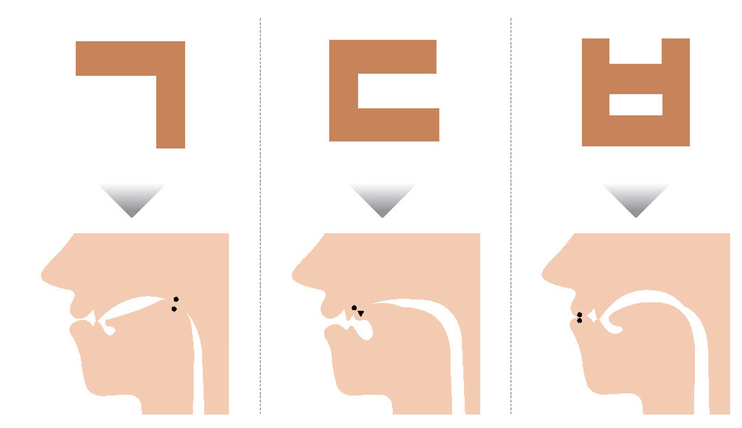
- ㄱ (g/k): Back of the tongue touches the soft palate before releasing air.
- ㄷ (d/t): Tip of the tongue touches the ridge behind the upper teeth.
- ㅂ (b/p): Both lips come together, then release air.
👉 Be careful: these Korean sounds are softer than their English equivalents. Don’t over-pronounce them.
Conclusion
Now you’ve learned ㄱ, ㄷ, and ㅂ, three of the most common Korean consonants. With these, you can read and pronounce many basic Korean words such as 바다 (sea), 고구마 (sweet potato), and 도로 (road).
👉 In the next part of our Learn Korean Consonants Series, we will study more letters and practice with additional vocabulary.
Keep practicing daily, and soon you’ll be able to read and speak Korean with confidence!
Learn Korean Consonants (1): ㄴ, ㅁ, ㄹ (Ni-eun, Mi-eum, Ri-eul) – Beginner’s Guide